UL Certification
We can provide customers with favorable prices, stable supply chain, and the best ship-ping costs, and promise customers the best and fastest delivery time.
Why UL1558 LV SwitchGear Is Gaining Attention in Large-Scale Power Projects
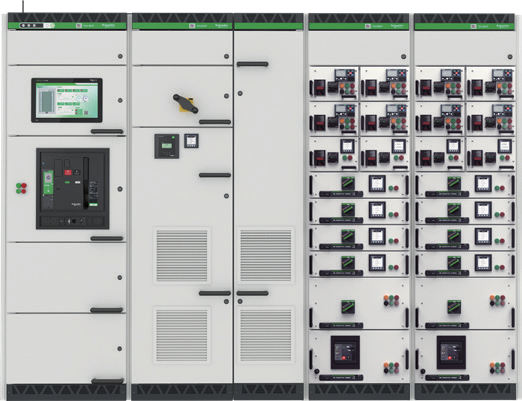
UL1558 LV SwitchGear is drawing more attention in large-scale power projects because project schedules are tighter, load profiles are less forgiving, and electrical rooms are expected to support expansion without constant redesign. In that setting, low-voltage switchgear is evaluated less as a commodity enclosure and more as part of the project’s risk control. The appeal of UL1558 LV SwitchGear comes from its ability to align power distribution, protection, and maintainability under a single specification that is often easier to coordinate across engineering, fabrication, shipping, and site installation.
For distribution systems, the practical value starts with construction detail. A UL1558 assembly is typically associated with metal-enclosed gear, segregated compartments, bus structures sized for the intended current path, and documented short-circuit withstand performance. Those points matter when the electrical room serves continuous operations, because cable routing, heat rise, access clearances, and service interruption all influence the real cost of ownership. In many projects, the difference between a workable layout and a difficult one appears in the bus arrangement, breaker compartment depth, and the way outgoing feeders are terminated.
Another reason for the growing interest is procurement clarity. Large projects often involve multiple consultants, equipment packages, and cross-border delivery requirements, so ambiguous specifications create delays. UL1558 LV SwitchGear is often favored when teams want a clearer standard for low-voltage switchgear construction and testing, especially where equipment must fit within a wider UL-oriented distribution architecture. The point is not only compliance on paper; it is having a design basis that can be reviewed against available space, heat dissipation, main-tie-main arrangements, feeder diversity, and maintenance isolation.
Material selection also affects project acceptance. Bus conductors, insulating barriers, support hardware, door latches, hinges, and internal plating all influence long-term behavior under vibration, humidity, and repetitive operation. In facilities such as data centers, industrial plants, and utility-adjacent substations, switchgear is expected to tolerate frequent switching and planned shutdown windows that are short and expensive. That makes field-replaceable components, accessible wiring ducts, and a clean segregation between control wiring and power circuits more valuable than cosmetic finish alone.
Transport and installation are often underestimated during early design reviews. Large switchgear sections can be difficult to move through loading docks, elevators, or tight plant corridors, so section size, lifting points, base channels, and shipping splits should be confirmed before fabrication is locked. If the gear is destined for a remote site or a phased build-out, modular shipment and field joining become important. Misjudging these details can lead to rework, damaged alignment, or awkward on-site assembly that slows energization.
Maintenance expectations are changing as well. Operators want safer access to inspection points, straightforward breaker withdrawal where applicable, and wiring layouts that do not force unnecessary exposure to live parts. The better installations usually begin with service access in mind: front or rear clearance, cable bending space, spare ways for future feeders, and enough labeling discipline to avoid confusion during outages. Common errors still appear when buyers treat UL1558 LV SwitchGear as interchangeable with any low-voltage distribution cabinet; enclosure class, internal separation, and fault duty should be matched to the actual application rather than assumed from the exterior form.
As large-scale power projects continue to concentrate more loads into fewer electrical rooms, demand is shifting toward equipment that can be reviewed, shipped, installed, and maintained with fewer unknowns. UL1558 LV SwitchGear fits that need when the design is treated as part of the project structure itself, not only as a final electrical item. For complex facilities, that distinction often decides whether the distribution system remains predictable after commissioning.
Send Us A Message
Send Your Inquiry
We welcome your cooperation and we will develop with you.


