UL Certification
We can provide customers with favorable prices, stable supply chain, and the best ship-ping costs, and promise customers the best and fastest delivery time.
What Makes IEEE Metal-Clad Switchgear Suitable for Industrial Substations?
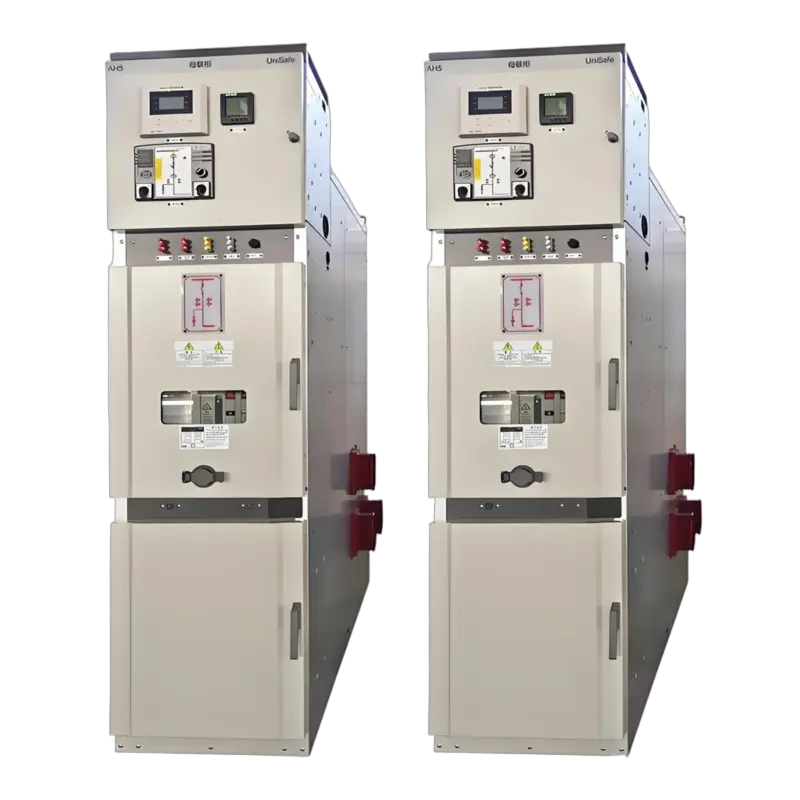
IEEE metal-clad switchgear suits industrial substations because it combines power switching, fault interruption, protective relaying, and access for maintenance within a compartmentalized assembly. Its value is especially clear where a plant must isolate individual feeders, service circuit breakers, and coordinate protection across several power sources or large loads.
For projects considering 4.16kV-38kV IEEE Metal Clad Switchgear, suitability depends on more than the voltage range. The equipment must match the system’s fault duty, grounding method, operating conditions, and maintenance strategy. Its grounded metal compartments and drawout breakers provide useful design features, but neither feature alone guarantees uninterrupted operation or protection against an internal arc.
What the metal-clad construction contributes
IEEE C37.20.2 addresses metal-clad switchgear construction and performance. A defining feature is the separation of major primary-circuit components into compartments using grounded metal barriers. These typically distinguish the circuit breaker, main bus, and cable connection areas, with instruments and controls arranged separately from primary-voltage equipment.
This separation gives the substation a practical internal structure. Cable terminations occupy a different working area from the main bus, and a removable breaker can be accessed through its designated compartment. Grounded barriers help limit accidental contact with adjacent primary components during permitted work.
Compartmentalization also supports more controlled maintenance planning. However, it does not make every compartment safe to open while neighboring circuits remain energized. The equipment arrangement, possible backfeeds, isolation points, and work procedures determine the safe working boundary. A cable compartment may remain energized from another source even after its associated breaker opens.
The distinction matters when comparing equipment descriptions. “Metal-enclosed” describes a broader equipment category; a metal enclosure alone does not establish metal-clad construction. A specification should identify the applicable assembly standard and construction requirements rather than relying on a cabinet’s appearance or a general medium-voltage label.
Drawout breakers make maintenance more manageable
Industrial plants often have limited opportunities for electrical shutdowns. A drawout circuit breaker helps because the breaker can be disconnected from its primary connections and removed for inspection or replacement without dismantling permanent bus connections.
Depending on the design, designated test and disconnected positions allow certain control checks with the primary circuit disconnected. Shutters cover stationary primary contacts when the breaker is withdrawn, and interlocks restrict incompatible operating sequences. These features support orderly operation, but they do not replace isolation, voltage testing, grounding where required, or lockout procedures.
A compatible spare breaker can shorten the time needed to restore a feeder when the installed breaker requires workshop maintenance. That advantage depends on preparation: the spare must have the correct ratings, mechanical compatibility, control connections, and approved configuration. Similar appearance or the same current rating does not establish interchangeability.
Drawout construction also creates physical requirements. The installation needs room for breaker withdrawal, handling equipment, and movement through the electrical room. A lineup that fits on a floor plan may still be difficult to maintain if a wall, doorway, or cable trench obstructs the removal path.
Fault ratings and protection must match the plant
A switchgear lineup can have the correct voltage rating and still be unsuitable for a substation. Industrial systems may receive fault current from the utility, connected generators, and running motors. Closing a bus tie or adding a transformer can change the available fault current significantly.
Several ratings answer different questions:
- Rated maximum voltage and insulation level: Can the equipment operate on the system and withstand the specified electrical stresses?
- Continuous current: Can the bus and connected devices carry the expected load under the stated service conditions?
- Short-circuit interrupting capability: Can the breaker interrupt the calculated fault current under the applicable rating conditions?
- Short-time withstand: Can the assembly withstand fault current for the specified duration while protection operates?
- Closing and latching capability: Can the breaker withstand the forces associated with closing onto a fault?
These ratings must be evaluated together. A high interrupting rating does not establish the continuous-current capacity, and an adequate bus rating does not prove that every breaker can interrupt the available fault duty. System characteristics, including the fault-current asymmetry, also affect breaker application.
Protective relaying turns those equipment capabilities into a functioning protection scheme. Current transformers, voltage sensing, relays, trip circuits, and breakers must work together to detect abnormal conditions and disconnect the intended part of the system.
For example, a fault on one outgoing feeder should generally be cleared by that feeder’s protection before an upstream device disconnects the entire bus. Achieving that selectivity requires coordination. Large motor starting currents, transformer energization, ground faults, and alternative operating arrangements all influence settings. Simply fitting a more capable relay does not resolve an incomplete protection study.
The system grounding method deserves early attention. It affects ground-fault current and the sensing and protection needed to detect it. Protection suited to one grounding arrangement may perform poorly on another, even when both systems operate at the same nominal voltage.
Metal-clad construction does not establish arc-resistant performance
Metal-clad and arc-resistant describe different attributes. Metal-clad construction addresses the assembly’s arrangement and other requirements. Arc-resistant performance depends on a separate evaluation of how equipment behaves during specified internal arcing conditions.
An internal arc can release intense heat, pressure, and hot gases. Grounded metal partitions alone do not establish that these effects will be directed away from personnel. A lineup presented as arc-resistant needs supporting test documentation that matches its offered construction and accessibility designation.
Installation conditions are part of that performance. Pressure-relief paths, exhaust ducts, ceiling clearances, room layout, and the condition of doors and covers can affect whether the installed equipment matches the evaluated arrangement. A test result for one configuration should not be assumed to cover a materially different installation.
Arc-resistant construction also does not eliminate the need for an arc-flash assessment or safe work practices. Its protection applies within specified conditions, which may depend on doors and covers being secured. Maintenance performed with compartments open presents a different exposure.
Remote switching or remote racking may help reduce personnel exposure during particular operations when appropriately designed and applied. These are separate features to evaluate alongside protection clearing time, operating procedures, and the physical installation.
Where industrial operating conditions change the selection
Metal-clad switchgear is useful in substations supplying large motors, process transformers, multiple production feeders, or systems with incoming and bus-tie breakers. These applications benefit from individual circuit protection, organized isolation points, and a maintenance approach built around removable breakers.
The surrounding environment can change the specification substantially. Conductive dust, corrosive contaminants, moisture, and condensation can undermine insulation or mechanical reliability. An indoor enclosure designation does not establish suitability for every industrial building.
A dusty process area may call for a separate conditioned electrical room. An outdoor installation may require weather protection, condensation control, and attention to temperature extremes. An E-HOUSE can provide a controlled installation environment, but its ventilation, access, cable routing, and pressure-relief arrangements must be coordinated with the switchgear.
Ambient temperature and altitude can affect thermal or dielectric application limits. These site conditions belong in the initial design information because they may change equipment selection or require adjustments to its application.
Load behavior matters as much as load size. A feeder serving a frequently started motor has different protection and operating requirements from one supplying a lightly loaded transformer. Where switching is frequent, the operating duty of the selected device should be reviewed; some motor applications are better served by a dedicated medium-voltage controller.
Reliability also depends on the substation arrangement
Metal-clad construction supports maintainability, but the single-line diagram determines which loads remain supplied during a shutdown or fault. A single incoming source and a single bus still create shared points of interruption, regardless of the quality of the individual cubicles.
Two incoming sources with a bus tie can provide operating flexibility, provided the sources, transformers, protection, and interlocking support the intended sequence. Closing the tie may increase fault duty. Transferring motor loads can introduce additional electrical considerations, so transfer logic must be designed around the connected equipment.
Control power is another dependency. Relays may detect a fault correctly, yet a breaker still needs a functioning trip circuit and adequate operating energy. The control-power arrangement, supervision, and maintenance provisions therefore belong in the reliability discussion alongside the primary equipment.
Future expansion should be considered with similar care. Reserving floor space is useful, but later additions also depend on bus extension provisions, protection changes, cable access, and the outage needed to connect new sections. Expected expansion should be reflected in the original arrangement.
When a simpler arrangement may be sufficient
Metal-clad switchgear adds capability, space requirements, and maintenance obligations. Those commitments are easier to justify when selective breaker protection, frequent operational changes, or continuity of service have clear value.
A small installation with infrequent switching and a straightforward transformer feeder may be adequately served by an appropriately rated switch-and-fuse arrangement. A dedicated motor-control application may favor equipment designed specifically for motor starting and protection.
The comparison should consider what happens after a fault or during service. Fuse replacement, breaker maintenance, spare equipment, fault diagnosis, and permitted outage duration affect the practical choice. The arrangement with the lowest purchase price may impose a longer restoration process; more elaborate equipment may add little value where extended shutdowns are acceptable.
What to establish before requesting a quotation
A useful specification begins with the system and operating requirements. Before comparing suppliers, establish:
- The single-line diagram, nominal system voltage, frequency, grounding method, and intended operating configurations.
- The calculated load and fault duties, including planned generation, motor loads, and future changes.
- The protection, metering, interlocking, transfer, and control-power requirements.
- The site environment, available space, cable entry, access needs, and breaker handling arrangements.
- Any required arc-resistant performance, supporting documentation, and installation provisions.
- The applicable assembly requirements, project approvals, maintenance provisions, and spare-equipment strategy.
Assembly compliance and third-party certification should be addressed separately. A statement that equipment follows IEEE requirements does not, by itself, establish a particular listing or approval. Project documents should identify what evidence is required and whether it covers the complete supplied assembly.
Shanghai Xuanhong Electric Power Equipment Co., Ltd. includes MV Main C37.20.2 metal-clad switchgear within its power distribution portfolio, alongside control equipment and prefabricated substation solutions. For a project combining these systems, the engineering discussion should connect the switchgear specification with protection, control interfaces, transformer connections, and installation requirements.
The most useful starting point is a single-line diagram supported by load, fault, and site information. That gives equipment selection a firm basis: the required switching and protection functions, the conditions under which they must work, and the access needed to keep the substation serviceable.
Send Us A Message
Send Your Inquiry
We welcome your cooperation and we will develop with you.