UL Certification
We can provide customers with favorable prices, stable supply chain, and the best ship-ping costs, and promise customers the best and fastest delivery time.
Which Standards Apply to Medium-Voltage Variable Frequency Drive Cabinets?
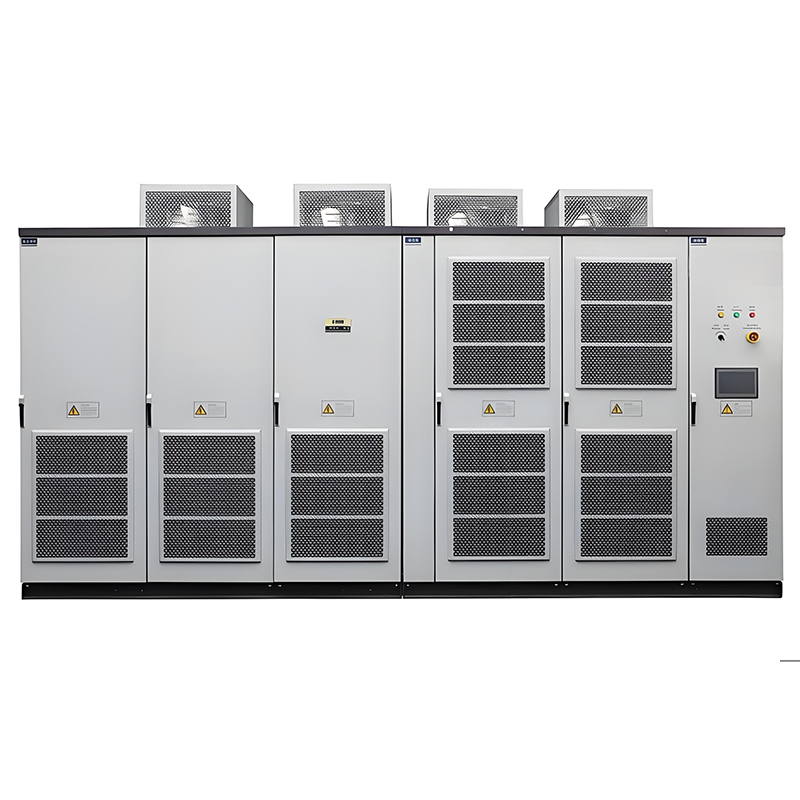
Which Standards Apply to Medium-Voltage Variable Frequency Drive Cabinets?
Selecting the right standards for a Medium-voltage variable frequency drive cabinet is essential for electrical safety, reliable operation, and regulatory compliance. For quality control and safety managers, the difficult part is rarely finding a standard number. It is deciding which requirements govern the drive itself, the enclosure, the connected switchgear, the installation, and the operating environment.
A medium-voltage VFD cabinet is not simply a larger low-voltage drive panel. It combines power conversion equipment, control circuits, isolation and protection functions, cooling systems, cable interfaces, and often line-side or load-side switching. In applications such as pumps, compressors, fans, mining equipment, process plants, and energy facilities, a cabinet may also need to coordinate with a medium-voltage distribution lineup. The applicable standard set therefore depends on the destination market, nominal voltage, fault duty, enclosure arrangement, and project specification.
There Is No Single “VFD Cabinet Standard”
One common inspection mistake is to ask whether a complete cabinet “meets UL” or “meets IEC” without defining the scope. A certification or compliance claim may apply to the power controller, individual components, the medium-voltage switching compartment, or the entire assembled enclosure. These are not interchangeable claims.
For North American projects, the standards discussion usually starts with UL requirements, ANSI/IEEE switchgear standards, and the National Electrical Code. For international projects, IEC drive, switchgear, enclosure, and installation standards are often the framework. Canadian projects may require CSA-recognized requirements in addition to local electrical-code review. The authority having jurisdiction and the project’s electrical specification remain decisive.
Core North American Standards to Review
For medium-voltage industrial control assemblies, UL 347 is frequently relevant. It addresses high-voltage industrial control equipment and is commonly considered when evaluating medium-voltage controllers, contactors, and related control assemblies. It should not be used as a shortcut for every part of the system: a cabinet with incoming switchgear, a transformer, harmonic equipment, or a bypass arrangement may bring additional standards into the review.
The National Electrical Code, NFPA 70, governs installation requirements in the United States. Article 490 is especially important for equipment operating above 1,000 V nominal, while Article 430 addresses motors, motor circuits, and controllers. These articles affect disconnecting means, overcurrent protection, conductor selection, clearances, grounding, marking, and accessibility. A factory-built cabinet can be well designed and still fail project acceptance if its site installation does not satisfy applicable NEC rules.
For the connected distribution equipment, ANSI/IEEE C37 standards are often central. ANSI/IEEE C37.20.2 applies to metal-clad switchgear, while ANSI/IEEE C37.20.3 applies to metal-enclosed interrupter switchgear. These standards matter when a VFD package is integrated with, or supplied beside, medium-voltage lineups. The distinction affects compartmentalization, switching devices, accessibility, and the expected construction of the assembly.
IEEE standards also help engineers assess system behavior beyond cabinet construction. IEEE 519 is widely referenced for harmonic control at the point of common coupling. It does not certify the cabinet itself, but it can materially influence the selected drive topology, input transformer arrangement, filters, and acceptance testing. IEEE 1566 provides guidance for performance of adjustable-speed AC drive systems rated 375 kW and larger, making it useful when project teams need a common basis for evaluating large drive-system performance.
IEC Standards Commonly Seen in Global Projects
IEC projects normally use a different but equally layered approach. IEC 61800 is the main family for adjustable-speed electrical power drive systems. IEC 61800-3 addresses electromagnetic compatibility, including emissions and immunity requirements. IEC 61800-5-1 covers electrical, thermal, and energy safety aspects of power drive systems. Where the drive is installed within machinery, IEC 60204-1 may also be relevant to the machine’s electrical equipment, although its use must be checked against the voltage and application limits of the specific installation.
For medium-voltage switchgear portions, IEC 62271 series standards are commonly specified. IEC 62271-200 is particularly relevant to AC metal-enclosed switchgear and controlgear for rated voltages above 1 kV and up to 52 kV. IEC 61936-1 may be considered for power installations exceeding 1 kV AC, while IEC 60529 is often referenced when the required enclosure ingress protection is expressed as an IP rating.
What Quality and Safety Teams Should Verify
Standards review should begin before factory acceptance testing, not after the cabinet is complete. The first check is the defined electrical boundary: where does the VFD package begin and end? Incoming circuit breaker, load-break switch, isolation transformer, bypass equipment, output reactor, cooling system, and control power transformer may each have separate construction and test implications.
Next, verify ratings rather than relying on a generic product label. Relevant values typically include nominal system voltage, insulation level, continuous current, short-circuit withstand or interrupting capability where applicable, control voltage, ambient temperature assumptions, altitude, enclosure type or IP level, and required creepage and clearance distances. In medium-voltage service, insulation coordination and grounding arrangements deserve particular attention because they influence both personnel protection and long-term reliability.
Arc-flash safety should also be treated as a system issue. NFPA 70E provides workplace electrical safety requirements, but it does not replace the need for proper equipment design, protective-device coordination, or site-specific arc-flash assessment. Interlocks, door access procedures, grounding switches, visible isolation provisions, and maintenance instructions should be evaluated in relation to the actual operating sequence.
A practical factory acceptance plan normally reviews wiring documentation, protective relay settings or interfaces, interlocking logic, insulation-related tests specified for the equipment, functional control checks, cooling alarms, communication interfaces, and nameplate consistency. The exact test program must follow the governing standard, approved drawings, and contractual specification; it should not be inferred from a similar low-voltage panel.
Avoid Mixing Standards Without Defining the Interface
Hybrid requirements are common. A project may require UL-oriented power distribution equipment, IEC-based motors, and ANSI switchgear interfaces. This can be managed, but only if the responsibilities are stated clearly. Saying that the cabinet is “UL compliant” does not automatically demonstrate that an IEC motor interface, EMC requirement, or utility harmonic limit has been satisfied.
Shanghai Xuanhong Electric Power Equipment Co., Ltd. develops power transmission, distribution, and control equipment for energy, data-center, and high-end equipment applications, including UL-oriented medium- and low-voltage assemblies. For projects involving American-standard automation control and medium-voltage distribution interfaces, early alignment of the applicable UL, ANSI, IEEE, NEC, CSA, or IEC requirements can prevent late changes to cabinet layout, components, documentation, and testing. An MV VFD Cabinetshould therefore be reviewed as part of the complete electrical system rather than as an isolated enclosure.
The most reliable starting point is a standards matrix prepared from the single-line diagram, destination country, utility requirements, installation location, and end-user specification. It should identify the applicable construction standard, installation code, performance requirements, test documents, and certification pathway for each section of the package. That approach gives quality and safety teams a clear basis for inspection—and reduces the risk of discovering a standards gap when the equipment is already on site.
Send Us A Message
Send Your Inquiry
We welcome your cooperation and we will develop with you.


